
The Green Camino: Racing Against Climate Paralysis
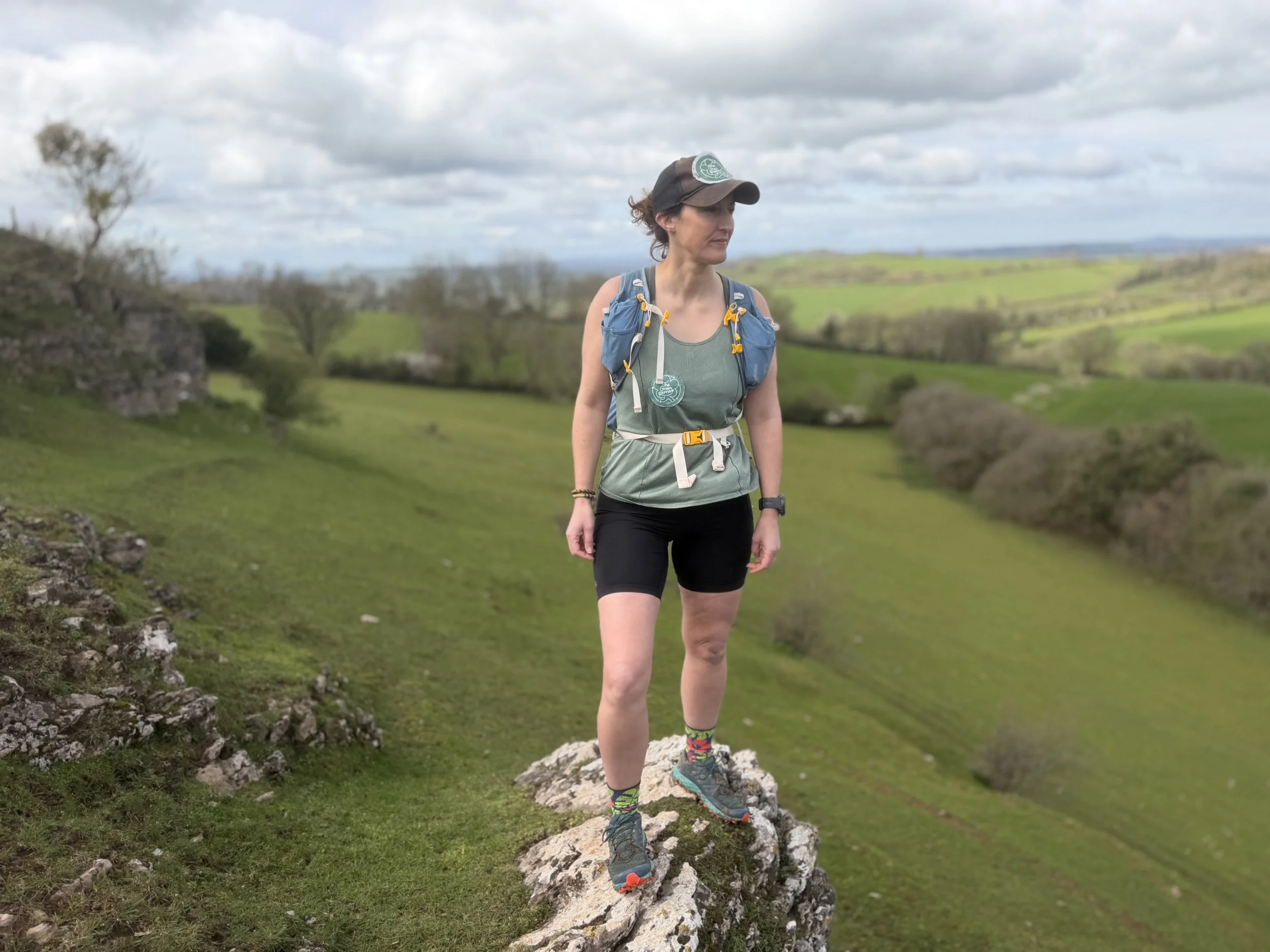
By Laura Briggs, The Green Runners
For those of us working in the green sport space, climate paralysis isn't just a metaphor; it’s a physical weight. As Partnerships Manager for The Green Runners and a vegan ultrarunner, I’m dedicated to the planet. Yet, I am increasingly slapped by waves of overwhelm.
I see the symptoms everywhere: running through nutritionally void, baked crop fields; battling heatwaves in "cool" seasons; and hearing stories of dreams extinguished by drought, wildfire, or the same extreme flooding that defines my life on the Somerset Levels.
The paralysis doesn't stem from a lack of collective will. It comes from the noise. Our small, urgent voices are being drowned out by corporations with more clout, more capital, and more polyester merch.
The Carbon Cost of the Trail
I’ve chosen to run the Camino Primitivo - Spain’s "original" route from Oviedo to Santiago de Compostela - to prove that adventure doesn't have to cost the Earth.
The Camino attracts roughly 400,000 pilgrims annually. Between flights, high-impact kit, and carbon-heavy diets, the average pilgrim leaves a footprint of roughly 0.5 tonnes of CO2 - the equivalent of a 3,500km drive. Runners are often worse; one study showed a single marathon preparation phase can rack up over 4 tonnes of CO2. It begs the question: for a sport that appears so in tune with nature, how did we become so detached from our environmental impact?
My mission is to cut that average Camino footprint by over 50%.
From "Eco Pilgrims" to a Solo Mission
The "Green Camino" was born in the blistering, uncharacteristic heat of the Welsh mountains during the Dragon’s Back Race. Originally, we were three ultrarunners - the "Eco Pilgrims" - questioning how we could do better. But life, training, and "curveballs" intervened. Three became one.
Now, I am preparing to run these 200 miles solo. To get there, I am swapping the airport lounge for ferries and buses. I am consciously "taking little, but giving back."
In an era of immediate gratification - social scrolling, instant news, and "convenience" at our fingertips - we have forgotten that the journey is the adventure. We have traded synergy with the natural world for a comfort zone that is slowly eroding our planet.
The $6 Trillion Question
Aggressive marketing through our smartphones; I’m shown "The Great World Race" offering seven marathons on seven continents in seven days. We watch influencers hop on a three-hour flight just to participate in a 5K race. We have to ask: Are we truly comfortable flying thousands of miles for a medal? Adventure used to mean exploration; now it often looks like box-ticking. Consider the scale:
Adventure Tourism: Valued at $608 billion in 2023, projected to hit $4-6 trillion by 2032.
Global Runners: An estimated 621 million people.
On our current trajectory, that represents a catastrophic volume of air miles, plastic waste, and unsustainable consumption.
While elite athletes are often forced into difficult trade-offs - their livelihoods tethered to sponsorships and global travel - their influence remains a potent force for good. But for the rest of us, the choice is ours. We decide where our money lands.
Imagine the shift if we backed the true advocates for the planet. The companies prioritising legacy over short-term dividends, and ecology over expansion, are the ones that deserve our investment. We don't have to fund the giants currently "taking over the world" - quite literally - one air mile and plastic bottle at a time.
The Weight of the Journey
Aiming for the start point in Oviedo has been a challenge in itself. Beyond the dwindling of personnel, the drudgery of winter training, sickness, and the juggle of "real life," the trepidation of being a woman alone has weighed heavy over months of planning.
The apprehension, this weight of responsibility, maybe that's exactly the point. It’s about moving out of the "comfort zone" that has become our dangerous new normal. To push ourselves is to protect what is important.
This isn’t about stemming the inherent human desire for travel and discovery, just reframing it.
I want to prove that slow travel isn't a sacrifice; it’s a rediscovery of joy. Adventure tourism can be a positive footprint, rather than a scar on the landscape. It’s time to stop racing to the destination and start protecting the ground we run on. The best way to stop the paralysis, it seems, is to quite literally keep moving forward.