Polluting sponsors of the Winter Olympics are melting the snow the games depend on - new research
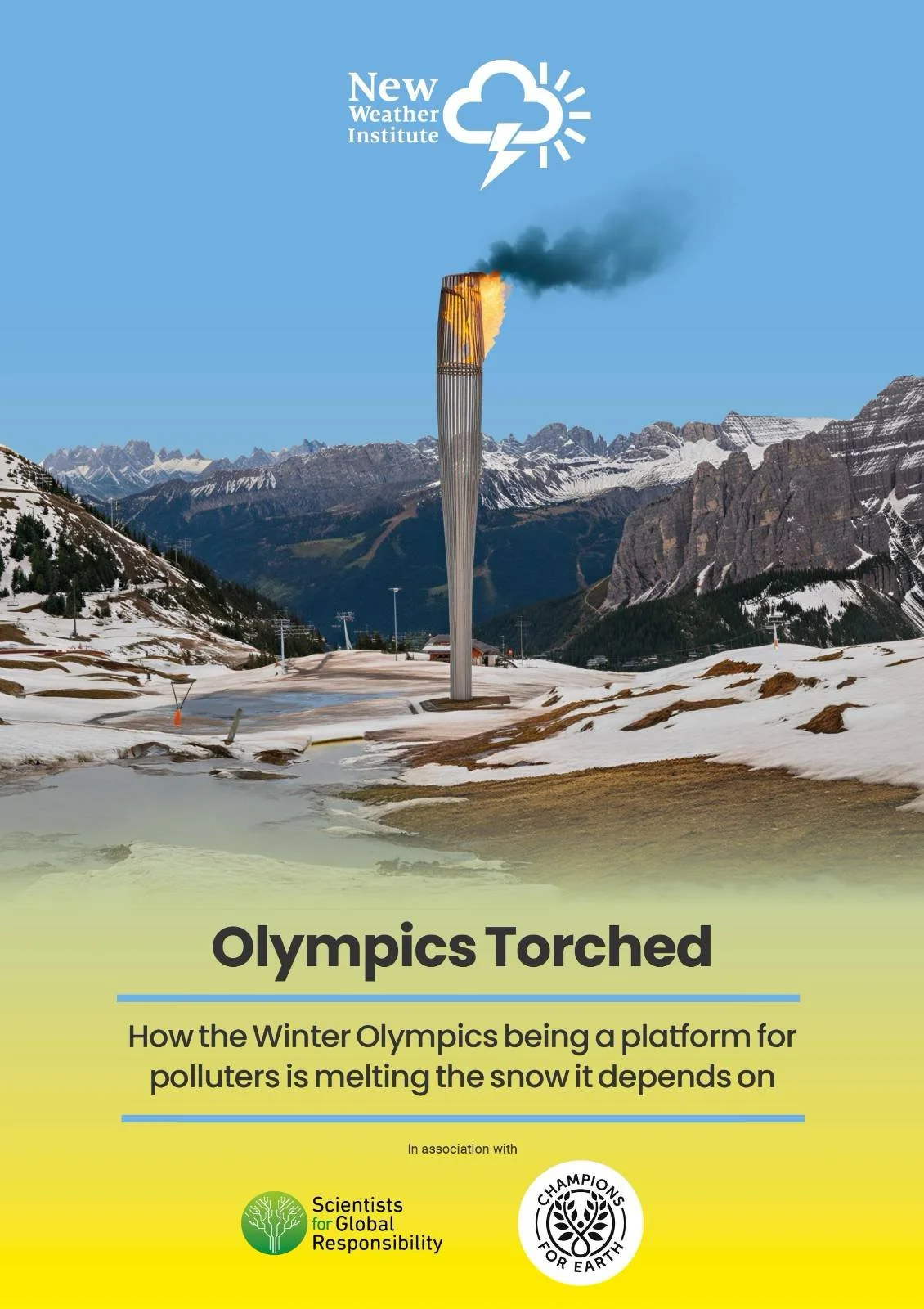
This World Snow Day, 18th January 2026 - a date celebrated by the global authority for winter sports, FIS, new research by Scientists for Global Responsibility and the New Weather Institute reveals how the climate impact of the Winter Olympic Games, and several of its key sponsors from heavily polluting industries, are in danger of torching the Games’ own future.
The Winter Games is the premier event in the winter sports calendar, with a broadcast audience of about two billion people. Yet the staging of this mega-event comes with significant emissions, just as winter sports are becoming acutely vulnerable to climate change, with multiple ski resorts becoming non-viable due to snow loss.
The report, Olympics Torched, estimates that staging the games alone will emit approximately 930,000 tonnes of carbon dioxide equivalent; estimated to cause a loss of 2.3 square kilometres of snow cover and over 14 million tonnes of glacier ice.
However, when just three of the games’ polluting sponsorship deals are accounted for, this amount increases by 40%. Using a combined economic and environmental methodology, the report, published in association with the athlete led campaign, Champions for Earth, estimates that high-carbon sponsorship deals with Eni, the Italian oil and gas giant; Stellantis, the international car-maker whose brands include Maserati, Lancia, Alfa-Romeo, and Fiat; and ITA Airways, Italy’s national airline, could induce additional emissions of about 1,300,000 tCO2e. Of these, the deal with oil supermajor Eni is responsible for more than half of the total.
Swedish professional cross-country skier, Björn Sandström, said:
As an athlete whose joy and livelihood comes from skiing I want a world where it can continue. The Olympics will always generate emissions, and reducing them must be a priority. But the Games’ greatest influence is the signal they send to the world. When that signal is driven by fossil-fuel sponsorship, it directly contradicts climate science and threatens the future of winter sport.